




Black History Month 2026
February is Black History Month!
Each February, we honor the history, culture, and the many contributions of Black Americans that have helped shape the United States in profound and lasting ways.
This Black History Month, the U.S. Department of Health and Human Services (HHS) Office of Minority Health (OMH) remains committed to advancing a clear priority: improving the health of Black/African American communities by focusing on the prevention of chronic diseases.
Through evidence-based resources, practical tools, and targeted information, HHS OMH is supporting prevention efforts that help families live longer, healthier lives and support the Administration’s mission to Make America Healthy Again. Under President Trump's leadership, HHS is prioritizing disease prevention and measurable health outcomes to enhance the well-being of Black/African Americans and support better health for all Americans.
Keep reading for more information, resources, and actionable insights to share with your community this Black History Month.
On This Page
Get Involved
- Download, share, and customize the content in our Black History Month Toolkit to meet the unique needs of your audiences.
- Follow and tag HHS OMH (@MinorityHealth) on X, Instagram, and Facebook.
- Use #PreventChronicDiseases and #BlackHistoryMonth to share how you and your organization are focused on improving the health and well-being of Black/African American communities this Black History Month.
#PreventChronicDiseases
Black/African Americans are at higher risk for certain preventable chronic conditions like heart disease, diabetes, and obesity. For too long, Black/African American families have lacked access to straightforward, reliable information about lowering their risk for these diseases. Keep reading to learn more about how these conditions are impacting Black/African American health and how following the new Dietary Guidelines for Americans (DGA) can help lower the risk of these chronic diseases. Follow and tag HHS OMH (@MinorityHealth) on X, Instagram, and Facebook, and let us know what tools and resources you’re using to help #PreventChronicDiseases this Black History Month.
Did you know:
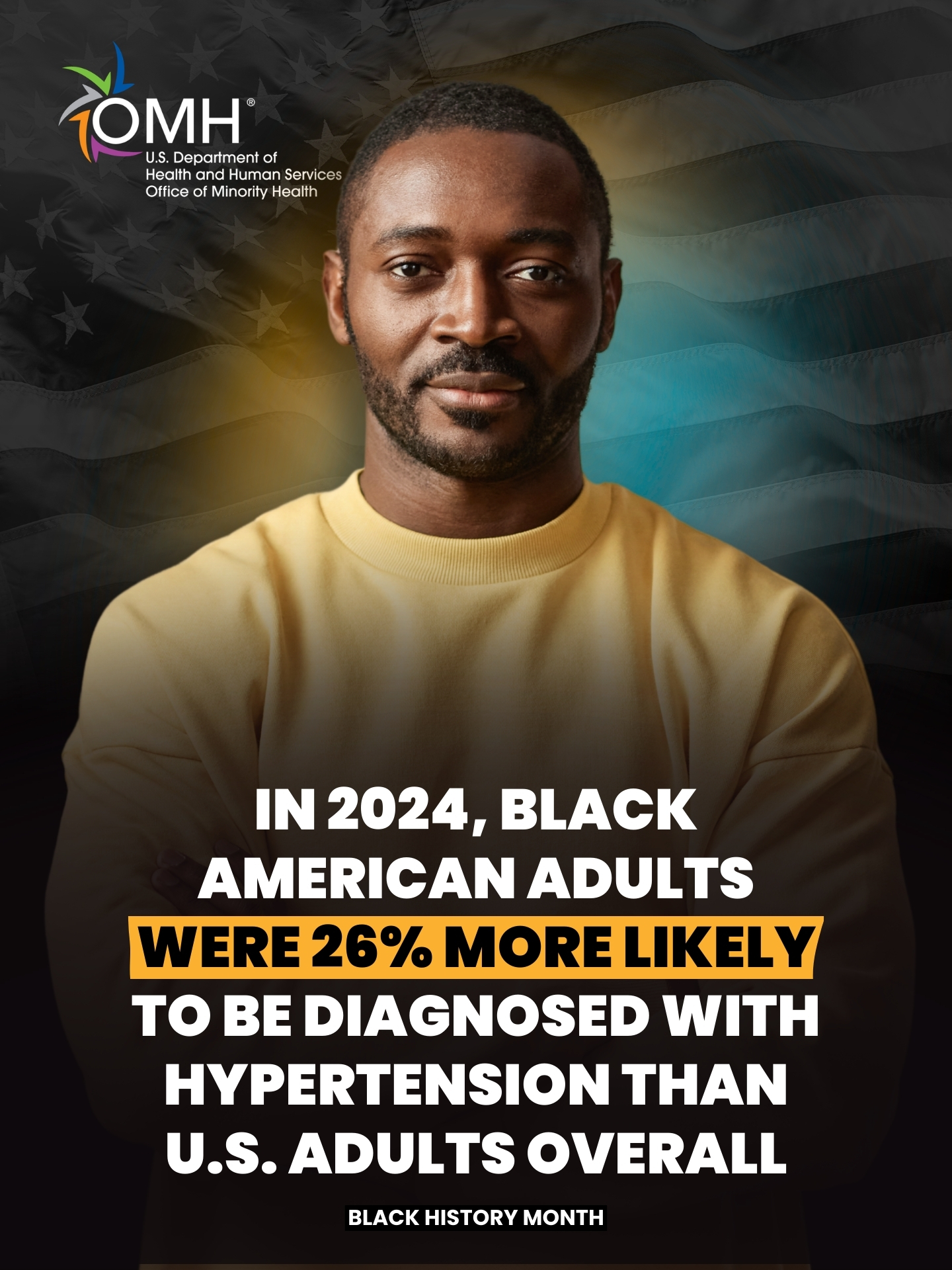
- In 2024, Black/African American adults were 26% more likely to be diagnosed with hypertension than U.S. adults overall. Hypertension raises the risk of heart disease and is one of the leading causes of death among Black/African American adults.
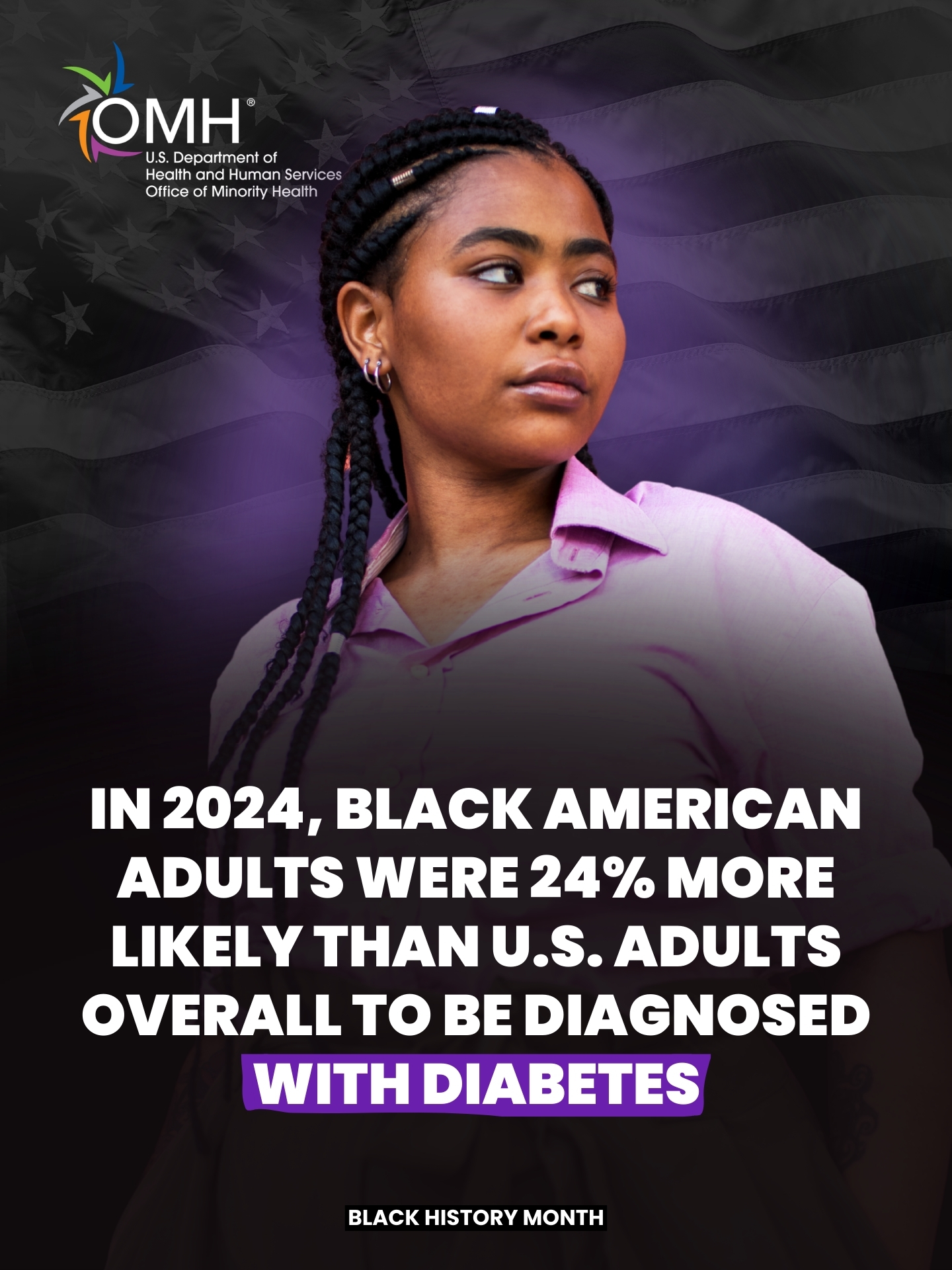
- In 2024, Black/African American adults were 24% more likely than U.S. adults overall to be diagnosed with diabetes. Black/African Americans also have a higher risk for developing prediabetes and type 2 diabetes.
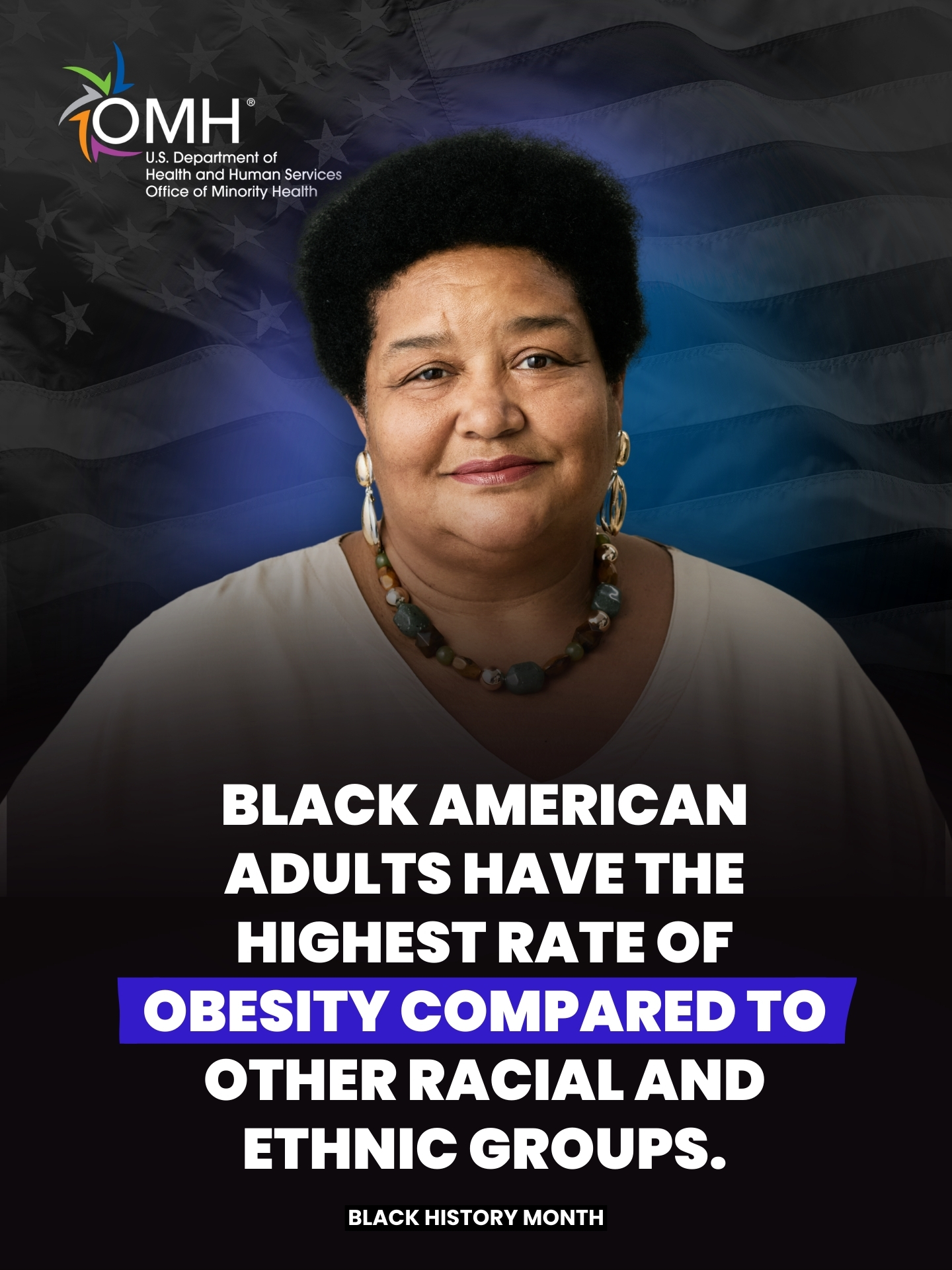
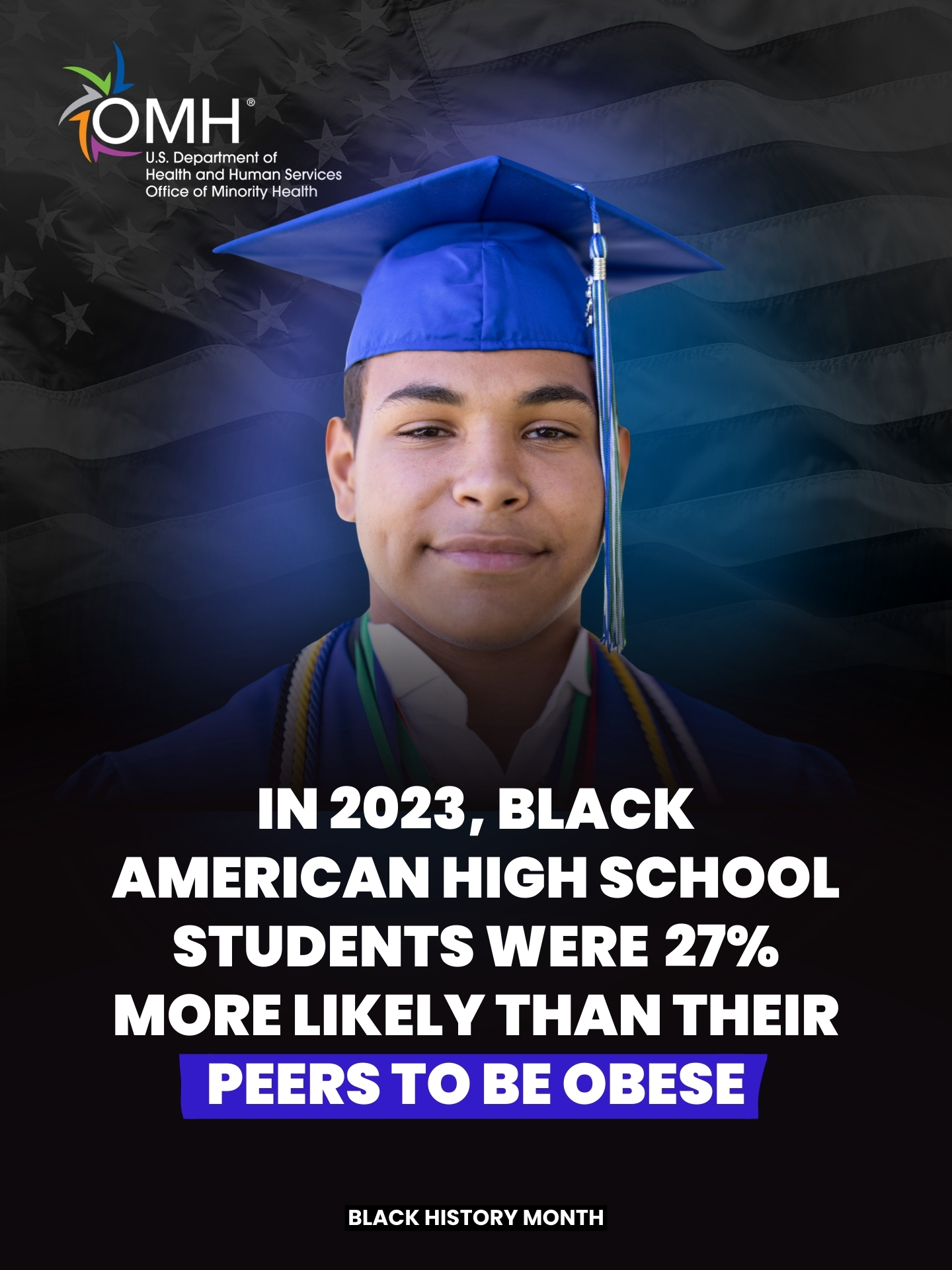
- Black/African American adults have the highest rate of obesity compared to other racial and ethnic groups. In 2024, Black/African American adults were 28% more likely than U.S. adults overall to be obese. In 2023, Black/African American high school students were 27% more likely than their peers to be obese.
Real Food, Real Solutions
These illnesses are not inevitable; they are the result of the Standard American Diet—a diet which, over time, has become overly reliant on highly processed foods. This Black History Month, HHS OMH calls on community leaders and health professionals to share evidence-based resources and practical tools, like the updated Dietary Guidelines for Americans, to help address the chronic disease crisis affecting Black/African Americans. By encouraging flexible, practical choices that prioritize real, whole foods, the Guidelines support healthier lifestyles and long-term disease prevention. In addition to the Guidelines, The New Pyramid – a flexible framework meant to guide better food choices – supports cultural traditions, personal preferences, and different lifestyles while reinforcing one core goal: eat real foods most of the time.
Visit RealFood.gov to explore the research, recommendations, and implementation guidance that shape the Guidelines, including the science, the policy guidance, and the everyday serving framework.
Featured News and Initiatives
Fact Sheet: President Donald J. Trump Promotes Excellence and Innovation at HBCUs
In April 2025, President Trump signed an Executive Order establishing a White House Initiative on HBCUs and a President’s Board of Advisors on HBCUs. These efforts are designed to strengthen educational excellence, innovation, and opportunity at HBCUs nationwide. Learn more about how the Administration is dedicated to strengthening HBCUs as centers of education and economic opportunity.
In December 2025, HHS announced the launch of the Roy Wilkins Fellowship for students enrolled at Historically Black Colleges and Universities (HBCUs) interested in public service. The fellowship honors Roy Wilkins and recognizes his work in advancing equality and strengthening democratic institutions. Learn more about how HHS and the Administration continue building meaningful partnerships with HBCU students and faculty.
Related HHS OMH Resources
Sickle cell disease (SCD) is a complex group of inherited blood disorders associated with debilitating pain and complications that can affect the entire body. SCD affects about 100,000 people in the United States and more than 90% are Black/African American. The HHS OMH Sickle Cell Disease webpage has resources and information you can use to spread awareness about SCD and help create supportive communities for individuals with SCD.
Black/African American Population Profile
HHS OMH compiles and maintains data on Black/African American health that includes information on chronic diseases and other health conditions. Use our Black/African American Population Profile to help your efforts in preventing chronic diseases among Black/African Americans.
HHS OMH Knowledge Center Topic Guides
Access curated searches from the HHS OMH Knowledge Center on key topics related to the health of Black/African Americans as well as other minority and tribal populations within the United States and its territories.
Looking for information and resources related to Black/African American health? Visit the HHS OMH Resource Center, where information specialists can assist you with research on Black/African American health literature, funding opportunities, and more.
Black History Month 2026 Toolkit
Download, share, and customize the content in this toolkit to meet the unique needs of your audiences. Follow and tag HHS OMH (@MinorityHealth) on X, Instagram, and Facebook, and use #PreventChronicDiseases to share how you and your organization are focused on improving the health and well-being of Black/African American communities this Black History Month (#BlackHistoryMonth).
X
- This #BlackHistoryMonth @MinorityHealth is addressing preventable chronic diseases affecting Black American communities. Heart disease, diabetes, and obesity are preventable with reliable information and real solutions: https://minorityhealth.hhs.gov/black-history-month-2026 #PreventChronicDiseases
- Black Americans face higher rates of obesity & diabetes, but these conditions are preventable through better nutrition & lifestyle choices. This #BlackHistoryMonth access federal data & resources to help #PreventChronicDiseases from @MinorityHealth: https://minorityhealth.hhs.gov/black-history-month-2026
- This #BlackHistoryMonth, explore federal resources to help #PreventChronicDiseases in Black American communities. Visit @MinorityHealth to access population health data, topic guides, & tools your organization can use to drive real change. https://minorityhealth.hhs.gov/black-history-month-2026
- This #BlackHistoryMonth, @MinorityHealth is addressing preventable chronic diseases that affect Black American communities at unacceptable rates. For too long, Black American families have lacked access to straightforward, reliable information about preventing heart disease, diabetes, and obesity. HHS OMH is providing the data and resources communities need to take action. Visit their Black History Month webpage to access health information, research tools, and practical resources focused on improving Black American health and preventing chronic disease. https://minorityhealth.hhs.gov/black-history-month-2026 #PreventChronicDiseases
- Black Americans face higher rates of preventable chronic diseases like heart disease, diabetes, and obesity. These are not inevitable conditions, but communities need access to reliable information and real solutions. This #BlackHistoryMonth, @MinorityHealth is providing communities with reliable federal data and resources to understand what’s driving these health challenges and how to prevent them. Their Black History Month webpage offers information, tools, and practical guidance to help families and community leaders take action. Visit https://minorityhealth.hhs.gov/black-history-month-2026 to access these resources and learn how to support healthier outcomes. #PreventChronicDiseases
- This #BlackHistoryMonth, community leaders and health professionals have access to comprehensive federal resources for preventing chronic diseases in Black American communities. @MinorityHealth compiles and maintains population health data, research topic guides, and practical tools that organizations can use to educate their communities and drive measurable health improvements. Whether you need demographic data, information on specific health conditions, or resources to share with families, their Black History Month webpage provides what you need to take action. Visit https://minorityhealth.hhs.gov/black-history-month-2026 to explore these resources and learn how you can support healthier outcomes in Black American communities. #PreventChronicDiseases
- This #BlackHistoryMonth @minorityhealth is addressing chronic diseases affecting Black American communities. Heart disease, diabetes, and obesity are preventable with the right information and resources. Visit their Black History Month webpage for reliable data and tools to support healthier outcomes in your community: https://minorityhealth.hhs.gov/black-history-month-2026 #PreventChronicDiseases
- Black Americans face higher rates of heart disease, diabetes, and obesity, but these diseases are preventable. This #BlackHistoryMonth, get reliable data and resources to help your community prevent chronic disease. Visit @minorityhealth to learn how taking steps towards better nutrition and other healthy habits can make a real difference: https://minorityhealth.hhs.gov/black-history-month-2026 #PreventChronicDiseases
- This #BlackHistoryMonth, explore resources to prevent chronic diseases in Black communities. Access health data, topic guides, and tools to help educate your community and support better health. Visit @minorityhealth to learn more: https://minorityhealth.hhs.gov/black-history-month-2026 #PreventChronicDiseases