
Sickle Cell Disease
Sickle cell disease (SCD) is a complex group of inherited blood disorders associated with debilitating pain and complications that can affect the entire body. SCD affects about 100,000 people in the United States; more than 90% are non-Hispanic Black or African American, and an estimated 3%-9% are Hispanic or Latino.
Through evidence-based resources and targeted information, the U.S. Department of Health and Human Services (HHS) Office of Minority Health (OMH) is supporting organized systems of care that help individuals and families affected by SCD live longer, healthier lives and support the Administration’s mission to Make America Healthy Again.

SCD Basics, Resources, News, and Therapies
FDA Approves First Gene Therapy for Young Children with Sickle Cell Disease
July 1, 2026
FDA Approves First Gene Therapies to Treat Patients with Sickle Cell Disease
December 8, 2023
Sickle Cell Disease | Medline Plus
What is Sickle Cell Disease? | National Heart, Lung, and Blood Institute
Promoting Good Nutrition in People with Sickle Cell Disease | HHS OMH Blog
Sickle Cell Disease Knowledge and Practices Among Healthcare Providers: Results of a National Survey | National Heart, Lung, and Blood Institute
Sickle Cell Disease Topic Guide | HHS OMH Knowledge Center
Sickle Cell Disease (YouTube playlist) | U.S. Department of Health and Human Services
Steps to Better Health Toolkit | Centers for Disease Control and Prevention
Cell and Gene Therapy (CGT) Access Model | Centers for Medicare and Medicaid Services
Sickle Cell Disease Gene Therapy Education Project | National Institutes of Health’s National Human Genome Research Institute
Sickle Cell Disease Programs | Health Resources and Services Administration's Maternal and Child Health Bureau
Observances and Events
May 14 and June 18, 2026: Understanding the Requirements for Sickle Cell Disease Comprehensive Systems of Care
Join HHS OMH for a two-part roundtable series focused on advancing comprehensive systems of care for sickle cell disease (SCD). A comprehensive system of care for SCD offers multidisciplinary and specialized healthcare services to the SCD community throughout the lifespan. Participants will learn about and discuss key components of comprehensive SCD care, current challenges, and emerging best and promising practices.
“Understanding the Requirements for Sickle Cell Disease Comprehensive Systems of Care” will engage SCD warriors, healthcare providers, community organizations, advocates, and federal partners to identify core needs and priorities for comprehensive SCD systems of care and to explore opportunities for coordination and collective action.
Part 1 is scheduled for Thursday, May 14, 2026, from 2:00 PM to 3:30 PM ET. The objectives for Part 1 are to:
- Identify key elements, current challenges, and emerging best practices of a comprehensive system of care for SCD, including the role of nutrition.
- Raise awareness about current activities and policies related to comprehensive systems of care for SCD.
Part 2 of the series, Federal Resources and Efforts to Advance Sickle Cell Disease Comprehensive Systems of Care, is scheduled for Thursday, June 18, from 2:00 PM to 3:30 PM ET. Part 2 will provide information about available resources and specific efforts across HHS, and address challenges highlighted during Roundtable 1 in achieving sickle cell disease comprehensive systems of care.
June 19: World Sickle Cell Day
World Sickle Cell Day is observed annually with the goal to increase public knowledge and an understanding of sickle cell disease, and the challenges experienced by patients and their families and caregivers.
September 1 - 30: National Sickle Cell Awareness Month
National Sickle Cell Awareness Month is observed in September to raise awareness about SCD and the challenges faced by those living with it. This month focuses on increasing understanding of SCD, promoting research, and supporting individuals and families affected by the condition.
Sickle Cell Disease and Gene Therapies Webinar Series
In observance of National Sickle Cell Awareness Month 2025, HHS OMH partnered with the HHS Office for Human Research Protections (OHRP) to host a two-part webinar series on sickle cell disease (SCD) and gene therapies.
Part 1—Trust, Clinical Trials, and Transformative Therapies: Ethical Pathways in Gene Therapy and Sickle Cell Disease
Part 2—Innovations and Advances in Sickle Cell Disease Gene Therapies
Managing SCD Complications
In people with SCD, red blood cells can become rigid and deform into a crescent or sickle shape. Sickled cells die early and often become lodged in small blood vessels, restricting blood flow, which can lead to serious health problems throughout the body. SCD-associated complications include anemia, acute and chronic pain, infections, pneumonia and acute chest syndrome, stroke, and kidney, liver, and heart disease.
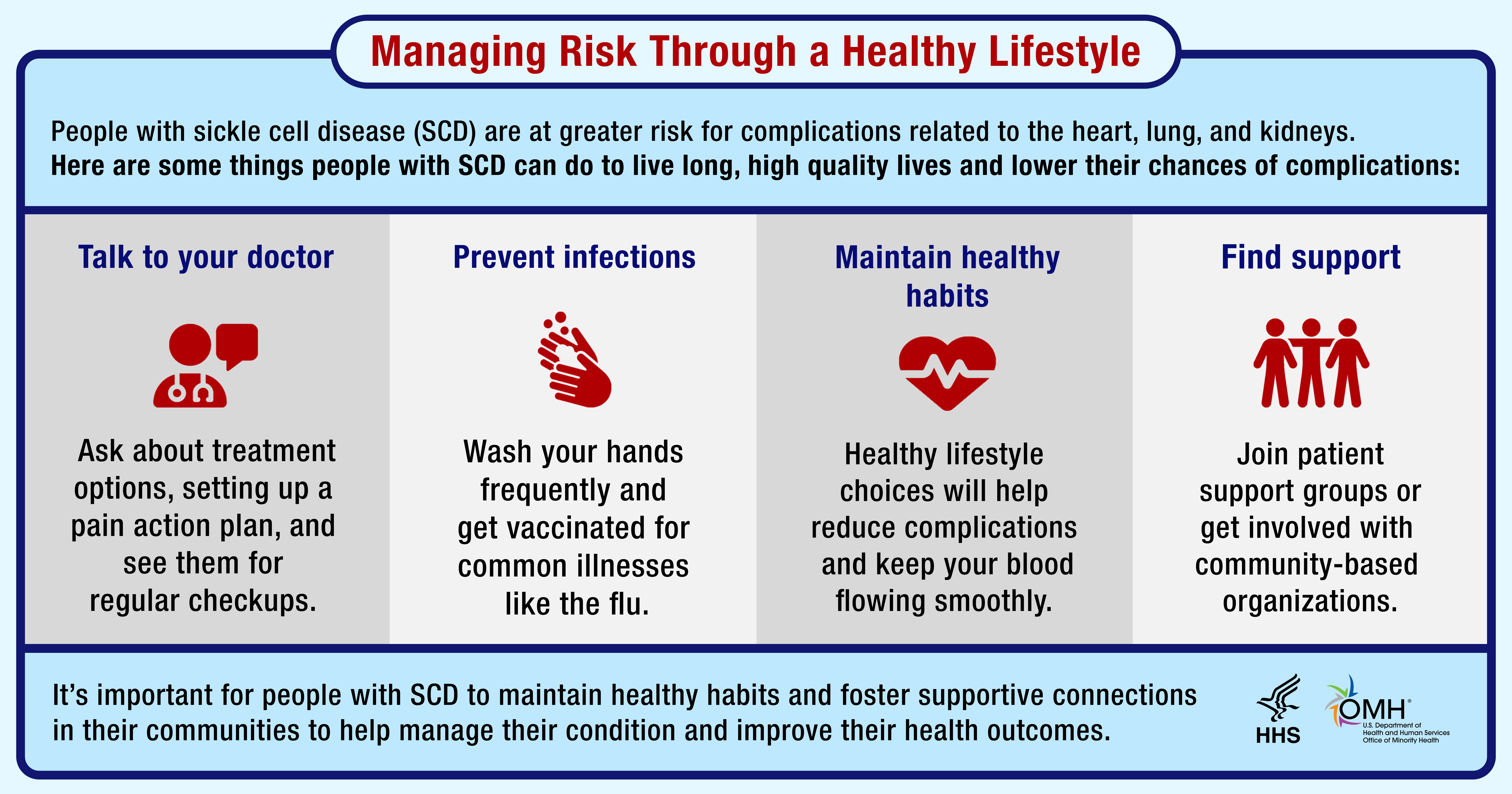
Managing Risk Through a Healthy Lifestyle

Improving Outcomes Through Supportive Communities